
How to Get Rid of Carpenter Ants Permanently (Step-by-Step Guide)
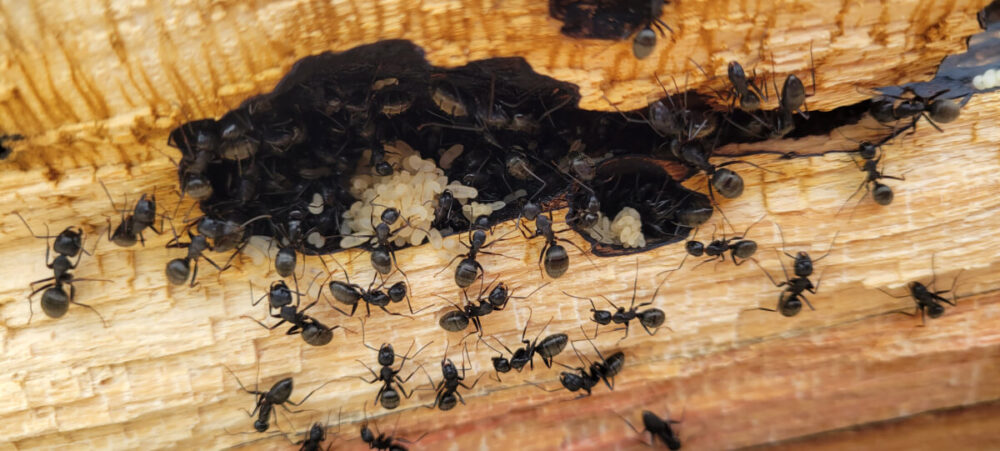
Carpenter ants are one of the most destructive household ants. While they do not eat wood like termites, they tunnel through it to build nests, which can weaken walls, floors, and wooden structures over time.
This guide explains how to get rid of carpenter ants permanently, using proven, SEO-friendly, homeowner-approved methods.
What Are Carpenter Ants?
Carpenter ants are large ants (usually black or red-black) that create nests inside moist or damaged wood. Over time, their tunneling can cause serious structural issues, especially if the infestation is ignored.
Common Signs of Carpenter Ant Infestation
- Large ants indoors, especially at night
- Small piles of sawdust-like material (called frass)
- Rustling sounds inside walls
- Increased ant activity near windows, doors, or damp areas
Step 1: Confirm It’s Carpenter Ants (Not Termites)
Correct identification is critical for effective treatment.
Carpenter ants:
- Large body size
- Narrow waist
- Uneven wing sizes (if winged)
- Hollow wood, not eaten wood
Termites:
- Smaller, pale bodies
- Thick waist
- Even wing sizes
- Wood appears eaten or damaged internally
Step 2: Locate the Nest (Most Important Step)
Killing visible ants alone will not solve the problem. The nest must be eliminated.
Common Nest Locations
- Damp or rotting wood
- Wall voids
- Attics and basements
- Window frames and door casings
- Firewood piles and tree stumps
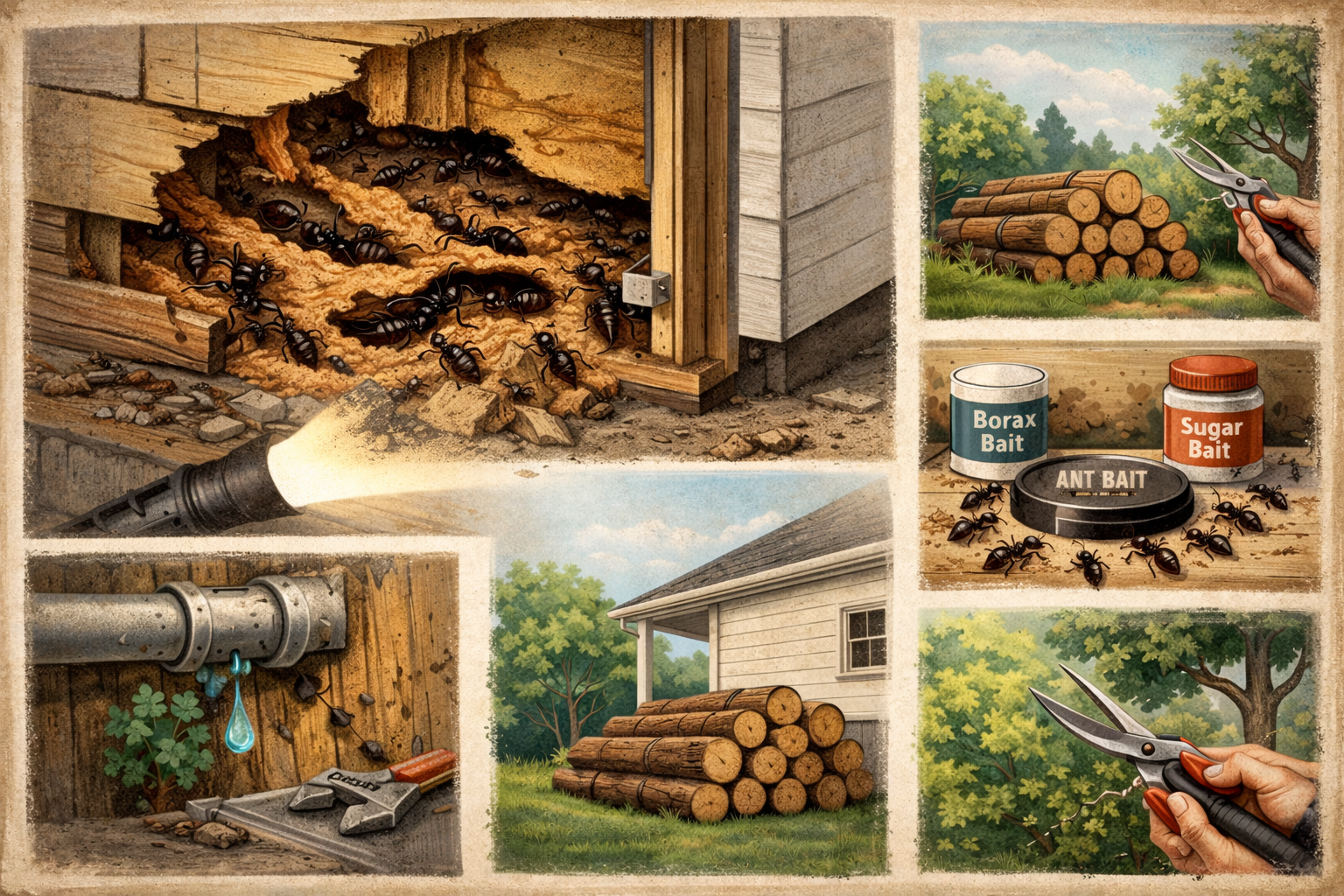
Pro tip: Follow ants at night with a flashlight—workers often lead directly to the nest.
Step 3: Use Carpenter Ant Baits (Best Long-Term Solution)
Baits are the most effective way to eliminate the entire colony.
Why Baits Work Better Than Sprays
- Worker ants carry bait back to the nest
- The queen and larvae are poisoned
- The entire colony collapses from within
Best Bait Types
- Boric acid–based ant baits
- Protein-based baits (early infestation)
- Sweet toxic baits (later stages)
⚠️ Avoid spraying insecticides near bait stations—sprays repel ants and stop bait transfer.
Step 4: Eliminate Moisture Sources
Carpenter ants are attracted to moist environments.
Moisture Control Checklist
- Repair plumbing leaks
- Improve ventilation in bathrooms and attics
- Replace water-damaged wood
- Seal roof, window, and door leaks
Reducing moisture is essential to prevent reinfestation.
Step 5: Outdoor Prevention Measures
Many infestations start outdoors and move inside.
- Store firewood at least 1–1.5 feet (30–50 cm) from the house
- Trim branches touching walls or roofs
- Remove rotting stumps and old wooden debris
- Keep gutters clean and dry
Step 6: Natural Remedies (For Minor Infestations)
Natural solutions work best as supporting measures, not primary treatments.
- Vinegar and water (1:1)
- Lemon juice
- Cinnamon powder
- Food-grade diatomaceous earth
These can disrupt trails but usually won’t eliminate large colonies.
Step 7: When to Call a Professional
Professional pest control is recommended if:
- The nest cannot be located
- Ants return repeatedly
- Wood damage is increasing
- Sounds are heard inside walls
Professionals may use wall-void injections, moisture detection tools, and long-lasting colony baits.
FAQ – Carpenter Ant Removal
What attracts carpenter ants to a house?
Moisture, leaking pipes, damp wood, food crumbs, and nearby outdoor nests attract carpenter ants indoors.
Can carpenter ants damage my house?
Yes. Over time, carpenter ants can weaken wooden structures by hollowing them out to create nests.
What is the fastest way to kill carpenter ants?
Sprays kill visible ants quickly, but baiting is the fastest way to eliminate the entire colony permanently.
Do carpenter ants go away on their own?
No. Without treatment, colonies grow larger and damage worsens.
Are carpenter ants worse than termites?
Both are destructive. Termites eat wood, while carpenter ants hollow it out. Both can cause costly repairs if ignored.
How long does it take to get rid of carpenter ants?
With proper baiting, colonies usually collapse within 2–4 weeks. Severe infestations may take longer.