
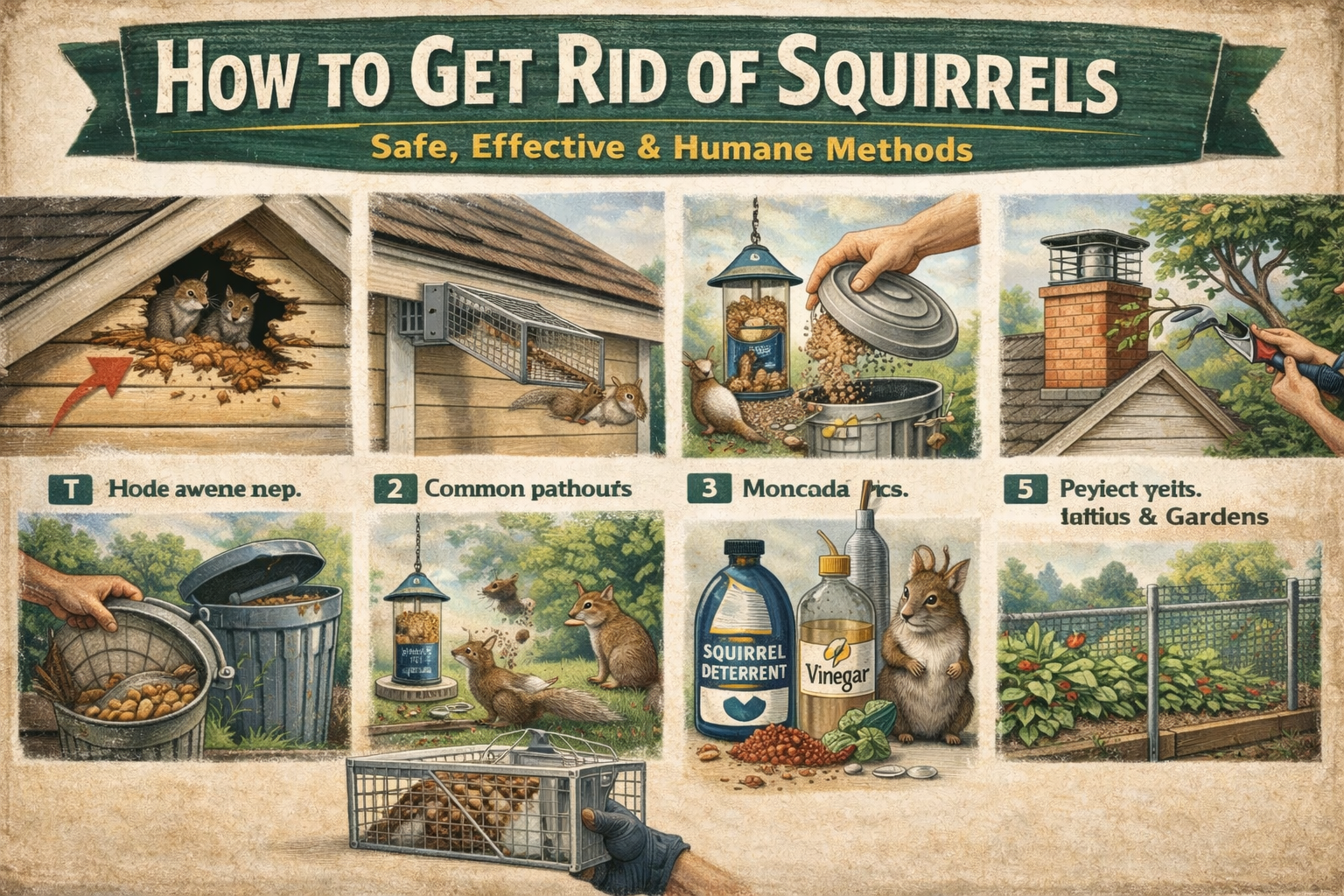
How to Get Rid of Squirrels (Safe, Effective & Humane Methods)
Squirrels may look harmless, but when they invade attics, roofs, gardens, or walls, they can cause serious damage—chewing wires, destroying insulation, and creating fire hazards. This guide explains how to get rid of squirrels effectively and legally, without causing unnecessary harm.
Why Squirrels Are a Proble
Squirrels often enter homes searching for:
- Warm nesting areas
- Food storage
- Safe places to raise young
Common Signs of a Squirrel Infestation
- Scratching or running noises in walls or attic (especially morning/evening)
- Chewed wires or wood
- Droppings in attic or near entry points
- Damage to roof shingles or soffits
- Holes in gardens or missing fruits/vegetables
Step 1: Identify Entry Points
Squirrels can squeeze through surprisingly small gaps.
Check:
- Roof edges and soffits
- Attic vents
- Chimney openings
- Loose siding or fascia boards
👉 Do not seal holes immediately if squirrels are inside—you may trap them.
Step 2: Use Humane Exclusion Methods (Best Solution)
Exclusion is the most effective and legal way to remove squirrels.
How Exclusion Works
- Install one-way exclusion doors
- Squirrels leave but cannot re-enter
- After removal, seal entry points permanently
This method avoids killing and prevents reinfestation.
Step 3: Remove Attractants
Squirrels stay where food is easy to access.
What to Fix
- Secure trash bins
- Remove bird feeders (or use squirrel-proof ones)
- Clean fallen nuts and fruits
- Store pet food indoors
Step 4: Use Natural Repellents
Repellents work best as deterrents, not standalone solutions.
Effective options:
- Peppermint oil
- Cayenne pepper (outdoor use only)
- Vinegar spray (on entry areas)
- Commercial squirrel repellents
⚠️ Repellents must be reapplied regularly.
Step 5: Protect Roofs, Attics & Gardens
- Install chimney caps
- Reinforce vents with metal mesh
- Trim tree branches at least 6–10 feet away from your home
- Use garden netting or fencing
Step 6: Trapping (Check Local Laws First)
Live trapping may be allowed in some areas but relocation is often illegal without permits.
Important notes:
- Trapped squirrels may carry diseases
- Improper release can harm wildlife
- Always check local wildlife regulations
When to Call a Professional
Contact a wildlife control expert if:
- Squirrels are inside walls or attic
- You hear baby squirrels
- There is electrical or structural damage
- Multiple entry points exist
Professionals provide:
- Humane exclusion
- Damage repair
- Long-term prevention
FAQ – Getting Rid of Squirrels
Are squirrels dangerous?
They can cause fires by chewing wires and may carry parasites.
Will squirrels leave on their own?
Rarely. Once they nest, they tend to stay unless removed.
Do mothballs repel squirrels?
No. Mothballs are toxic and unsafe—do not use them.
What smells do squirrels hate?
Peppermint, vinegar, garlic, and spicy odors are effective deterrents.
Is it legal to kill squirrels?
Laws vary by region. In many areas, lethal control is restricted or illegal.